Tuesday, November 17, 2009

Domestic Violence Bill: Logical or Illogical?

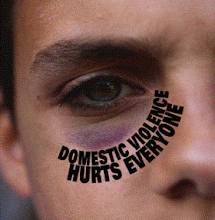
It is difficult to understand the logic behind the Council of Islamic Ideology’s criticism of the Domestic Violence (Prevention and Protection) Bill, recently passed by the National Assembly. Expressing its reservations, the CII referred to the bill as ‘ambiguous’ and ‘containing few reforms’. It warned that in its current form, it would fan family feuds, push up the divorce rate and allow the police to violate what the council referred to as the ’sanctity of the home’. In fact, the bill against domestic violence is one of the more significant steps taken recently by the country’s legislators.

The abuse of women and children, particularly in the domestic sphere, is endemic in Pakistan. In most cases such transgressions — even those that merit being treated as assault under the Pakistan Penal Code — go unreported as they are considered a private matter. The domestic violence bill brings rights abuse in the home into the domain of the justice system, thereby promoting societal consensus against forms of violence that could otherwise be considered acceptable. Domestic violence is rampant partly because the lack of legislation on the issue was understood as a refusal by the law to recognise such abuse as a crime.
The CII also criticised the bill on the grounds of gender-discrimination, saying that it ignored the possibility of old or weak men suffering. In fact, the bill covers a variety of situations by defining a ‘domestic relationship’ as inclusive of ties through kinship, adoption, joint family, employment and domestic help. ‘Vulnerable’ persons are defined as those at risk because of ‘old age, mental illness or handicap or physical disability or other special reasons’.
The definition also includes domestic help. This clearly extends the protection of the law to anybody in a domestic situation, regardless of age or gender. Indeed, the protection granted to domestic staff is significant, given that economic dependence often forces such people to silently witness the trampling of their rights.
It is true that no piece of legislation is perfect; the body of a country’s law represents, in fact, a continuous process to identify issues and create safeguards. Yet the grounds on which the CII has based its reservations represent the regressive and parochial thinking that has kept this country mired in the dark ages. It can be said that those who subscribe to this attitude condone domestic violence and believe that the issue should remain unaddressed. The CII could spend its time more usefully by projecting moves meant to prevent rights abuse and launching its own initiatives in this regard.
*The Domestic Violence Act in India is always under scrutiny for that fact that it open the flood gates for cases even on minor issues, it also provides protection for unmarried couples ( the female partner) and also women in live-in relation with men. A law is always misused by some or the other class of people, but that does not qualify that this should lead to a solution of lawlessness for that aspect.
Domestic Violence is a major issue in the two countries, legal efforts should be made to eradicate it. If people think this law can be misused then they must make viable committees to check the credibility of cases filed under it.

The reach of the law should reach the most affected strata of women, then only it will solve its purpose of its existence.
By Soumya Saxena

For more articles please visit: http://pakistandesk.com/

Saturday, November 7, 2009

Rights of Women in a Pakistani society


'Women's rights in Pakistan' is a big question often raised in the West. It is believed that women has no rights or privileges in the male dominated society of Pakistan.

Before discussing whether women have rights in Pakistani society or not, first understand Pakistani society.

Pakistan is an Islamic state, where people, not only take pride in strictly adhering to the Islamic values but are ready to sacrifice their loved belongings for the glory and sanctity of Islam. Islam has accorded a highly venerated social position to women. Islam acknowledges the rights and privileges of the women in society. Likewise, Islam does not impose any restrictions that may hamper the social growth and development of the woman. A woman is equally important member of society. The woman plays a vital role in building the society on healthier and stronger foundations.

The women in Pakistan have been constantly complaining of having being isolated from the mainstream of society. Women feel disillusioned on being maltreated by the male-oriented set up in Pakistan. They strongly claim that if they are given a chance, they can contribute more positively towards the development of all social aspects.

However the Pakistani society usually adopts a hostile attitude towards the women. Their development in society is hindered due to many factors. Particularly the rural woman has to sustain, sometimes, unbearable dominance by the other sections of society.

Numerically the women in Pakistan are almost equal to men. They are equal in potential as the men. The Pakistani women live in the most diversified location of the tribal, feudal or urban environments. She can be a highly qualified and self-confident professional or a diffident peasant toiling along with her men-folk.

Women in Pakistan observe 'Pardha' while coming out of domestic environs or mixing up with other sections of society. 'Pardha,' or veil, is meant to segregate the women-folk from the male section of the society. The women are not prohibited from working but at the same time are supposed to observe strictly the rules of morality.

Due to pardha system, most of women (particularly of low education) have to take up work at home. They involve themselves in knitting, dressmaking, embroidery, etc.

In the areas like NWFP and Balochistan, life is governed and regulated by strict beliefs and behavioral patterns. A woman has no say in any aspect of her life, including her marriage. In the populated provinces of Sindh and Punjab, a woman may keep her connections with her family after marriage. She expect support from her brothers and father in case of separation and divorce from her husband. In Punjab and Sindh, women are seen working in the fields with their men-folk collecting fuels and in some cases working on the construction sites shifting material from one place to another.

Most of women in rural areas have to bear double burden of domestic and outside work. They are the first to rise and last to bed. They lit the fire to prepare breakfast, wash the utensils and cleans the house before setting out on their outside work. When every member has ridden the bed after completing day's work, they are engaged in working.

Although the conditions of women in urban areas are better than those of the rural women. Yet the old traditions and religious restraints have hindered the independent and free movement of the women.

Pakistan is the first country in the Muslim world that has elected a woman as its prime minister twice.
- Maham Masood

Society and Shame


Hey all i would love to get some feedback from you on the current level of recognition and acceptance of domestic violence in our society.
Have things changed?
How do we change societys attitude to domestic violence?
Why is there still such stigma and judgement of those in need?
Its still a dirty word.. i hate that.... i hate cowards and i dont understand HOW domestic violence is not tackled head on in government, discussed openly with no shame.
-Maham Masood & Zainab Sohail

Thursday, November 5, 2009

Human Rights


"'Human Rights Watch is dedicated to protecting the human rights of people around the world.'

Human Rights Watch conducts regular, systematic investigations of human rights abuses in some seventy countries around the world... We address the human rights practices of governments of all political stripes, of all geopolitical alignments, and of all ethnic and religious persuasions. Human Rights Watch defends freedom of thought and expression, due process and equal protection of the law and a vigorous civil society.

Human Rights Watch began in 1978 with the founding of its Europe and Central Asia division (then known as Helsinki Watch). Today, it also includes divisions covering Africa, the Americas, Asia and the Middle East. It includes three thematic divisions on arms, children's rights and women's rights. ."